
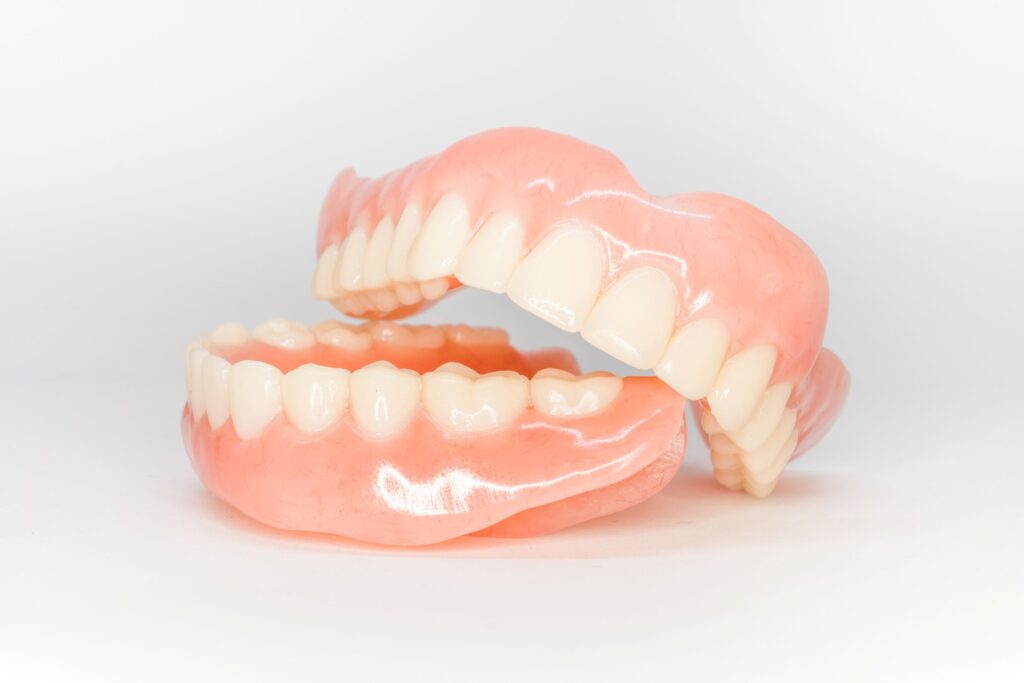
Dentures are a popular treatment for tooth loss because they are considered to be both versatile and cost-effective. Whether you’ve lost several or all your natural teeth, your dentist can provide a lifelike restoration to improve your smile’s appearance and functionality to boost your confidence.
But that’s only as long as it fits correctly! If it’s loose or destabilized, it can cause sores, gum disease, or a bite misalignment that can detract from your dental health. Continue reading to learn more about denture adhesives and how they might help!
What are Denture Adhesives?
Would you be surprised to learn that these glues were developed in 1913? With that said, they weren’t recognized as medical products until 1935 after undergoing additional development.
Today, these adhesives generally include three main ingredients: the adhesive agent itself, an antimicrobial to create a germ-free seal, and other ingredients for flavoring or other properties. These products are all intended to help your restoration form a stronger bond with your connective tissues to remain more firmly in place. When they come into contact with your saliva, they form a sticky substance that improves your dentures’ grip.
What are the Different Types of Denture Adhesives?
Many stores and pharmacies carry various kinds and brands of denture glue, so it’s usually not too difficult to find a suitable option. There are three main types, which are outlined in more detail below:
- Creams. These come in a squeezable tube so you can easily apply the cream to the underside of your prosthetic before inserting it. This forms a layer of cushion between your tissues and the acrylic base to help ease discomfort and provide a stronger bond.
- Powders. This type is sprinkled onto the undersurface of your teeth, which may be easier for patients with mobility challenges or other conditions, such as arthritis, that make it difficult to manipulate small objects.
- Strips. These thin, flexible strips are easy to peel and apply to your dentures and typically involve less cleanup than creams or powders.
Who Needs to Use Denture Adhesives?
Potentially, anyone who is concerned about loose dentures might benefit from using an adhesive. But that isn’t the only circumstance in which one of these glues might be helpful or required.
For example, if your dentures are new and you’re feeling extra sensitive, using a cream can provide much-needed comfort as you adjust to your new restoration. Not only that, but those who engage in public speaking or performance, like teachers or musicians, often use denture glues for added stability during the workday.
If you try an adhesive and it doesn’t seem to help, it may be time to contact your dentist to reline or replace your dentures instead!
Meet the Author
Dr. Fred Fox is passionate about helping people enhance their lives by improving their oral health. He earned his Doctor of Dental Surgery at Virginia Commonwealth University, and today, he has 25+ years of experience meeting his patients’ unique needs. He offers a complete menu of services utilizing advanced technology to provide more accurate, comfortable treatment results. If you are concerned about the fit of your dentures, you can request an appointment on the website or call (904) 853-6888.